VisiVra Reviews 2026: A Biochemist’s Honest Assessment
I analysed VisiVra’s Supplement Facts label, sales claims, pricing and refund terms against published research. Here is what holds up, what does not, and how to decide if it is right for you.
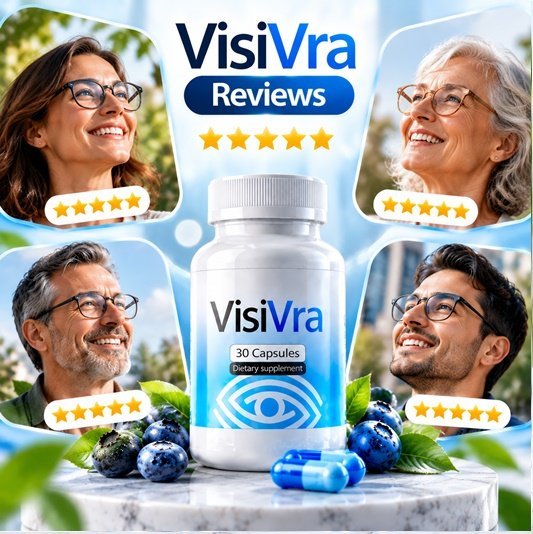
Most VisiVra reviews online fall into two camps: glowing pages that repeat the sales copy, or angry posts that call every supplement a scam. Neither helps you decide. In this review I treat VisiVra the way I would treat any formula that crosses my desk: I read the label, compare each ingredient with published research, check the business terms, and give you an honest verdict, including the parts the seller would rather not highlight.
A quick note on independence: this site earns a commission if you buy through our links. That income never decides the verdict, and you will see plenty of criticism below. You can read how we work on our editorial policy page.
How I reviewed VisiVra
- Read the Supplement Facts label (lot EVIB_211_03_050626) and transcribed every ingredient and dose.
- Read the seller’s materials in full: order page, return policy, terms of service, disclaimer and contact page.
- Checked each ingredient against authoritative sources: the National Eye Institute, the NIH Office of Dietary Supplements, NCCIH, Memorial Sloan Kettering’s integrative medicine database, peer-reviewed reviews and the European Food Safety Authority.
- Compared the marketing claims with that evidence.
- Reviewed price, shipping and refund terms for anything a buyer could miss.
I have not run a clinical test of VisiVra and do not claim personal results. What follows is an evidence review.
The formula: what the label shows
| Supplement Facts (1 capsule) | Amount per serving | % Daily Value |
|---|---|---|
| Vitamin A (as beta-carotene) | 450 mcg RAE | 50% |
| Vitamin C (as ascorbic acid) | 90 mg | 100% |
| Vitamin E (as DL-alpha tocopheryl acetate) | 15 mg | 100% |
| Zinc (as zinc oxide) | 11 mg | 100% |
| Selenium (as selenium AAC) | 20 mcg | 36% |
| Copper (as copper gluconate) | 0.9 mg | 100% |
| Chromium (as chromium picolinate) | 15 mcg | 43% |
| Proprietary Blend | 351 mg | † |
Proprietary blend (351 mg): Taurine, Ginkgo (Ginkgo biloba) leaf, Eyebright (Euphrasia officinalis) aerial parts, Grape (Vitis vinifera) seed extract, Coleus forskohlii root, Alpha lipoic acid, Rutin (from Sophora japonica), Quercetin (from Sophora japonica), Bilberry (Vaccinium myrtillus) fruit extract, Saffron (Crocus sativus) stigma extract, Lycopene, Lutein (from marigold, Tagetes erecta, flower), Zeaxanthin, Astaxanthin. †Daily Value not established. Other ingredients: hypromellose (vegetable capsule), rice flour, magnesium stearate, silicon dioxide. Transcribed from the product label (lot EVIB_211_03_050626).
The label is more informative than the sales page, which lists only six ingredients and no doses. The vitamin and mineral base is clearly dosed. The headline eye ingredients, however, are inside the proprietary blend.
Ingredient by ingredient
| Ingredient | Amount | Evidence for eyes | Detail |
|---|---|---|---|
| Lutein | In 351 mg blend | Good for raising macular pigment; mixed for disease outcomes | Lutein page |
| Zeaxanthin | In blend | Good alongside lutein (AREDS2) | Zeaxanthin page |
| Astaxanthin | In blend | Early and promising for eye strain | Astaxanthin page |
| Bilberry extract | In blend | Weak and mixed | Bilberry page |
| Saffron extract | In blend | Early trials in AMD and other conditions (20–50 mg/day studied) | Ingredients hub |
| Ginkgo, eyebright, grape seed, coleus, ALA, rutin, quercetin, taurine, lycopene | In blend | Limited or indirect eye evidence | Ingredients hub |
| Zinc + copper | 11 mg + 0.9 mg | AREDS core, but AREDS used 80 mg + 2 mg | Zinc page |
| Vitamin A (beta-carotene) | 450 mcg RAE | Essential; benefit mainly if deficient | Vitamin A page |
| Vitamins C and E | 90 mg and 15 mg | AREDS core, but AREDS used 500 mg and 180 mg | Ingredients hub |
| Selenium, chromium | 20 mcg, 15 mcg | General nutrition; no specific eye evidence | Ingredients hub |
As a design, VisiVra looks like a multivitamin-strength version of the AREDS2 nutrients with a long list of botanicals added. The dose-response question still matters. In the 2021 macular pigment meta-analysis, lutein intakes below 5 mg a day did not significantly change macular pigment, 5 to 20 mg produced a modest increase and 20 mg or more produced the largest increase. With 14 ingredients sharing 351 mg, we cannot know where VisiVra falls on that curve.
Checking the marketing claims
| Seller claim | What the evidence says | Verdict |
|---|---|---|
| Supports visual clarity and retinal function | Plausible for lutein, zeaxanthin and vitamin A at adequate doses; not tested for this formula | Plausible, unproven |
| Supports antioxidant defences | Vitamins C and E, selenium and several botanicals are antioxidants | Reasonable |
| Supports healthy ocular circulation | Some lab data for bilberry, ginkgo and grape seed; little eye-specific human evidence | Weak |
| Helps defend eyes from blue light | AAO: no scientific evidence that screen blue light damages the eye | Not supported |
| Helps eyes adapt to daily strain | Early astaxanthin studies on eye fatigue are encouraging | Early evidence |
What I like about VisiVra
- A real Supplement Facts label. All seven vitamins and minerals have stated doses and forms.
- Safe micronutrient levels. Zinc at 11 mg is well below the 40 mg upper limit, and copper is included to balance it.
- Beta-carotene rather than retinol. Vitamin A as 450 mcg RAE of beta-carotene avoids the preformed vitamin A upper limit and is a small amount compared with the high doses linked to lung cancer risk in smokers.
- Lutein and zeaxanthin included. This pairing matches the carotenoids used in AREDS2.
- Simple to take: one capsule a day.
- A clear refund window with a published return address.
What concerns me
- The proprietary blend. The most eye-specific ingredients have no individual amounts.
- Much lower doses than AREDS2. Anyone with intermediate AMD should not treat VisiVra as an AREDS2 alternative.
- More interactions than a simple eye vitamin. Ginkgo, bilberry and forskolin may raise bleeding risk; alpha lipoic acid and chromium may lower blood sugar; forskolin may lower blood pressure.
- The blue-light claim, which the American Academy of Ophthalmology does not support.
- Refund friction: contact support first, return every bottle and pay return postage.
- Limited company information. The label names VisiVra in Aurora, Colorado as distributor; the manufacturer and any GMP certification are not stated.
What customers say
Below are customer reviews shared with us, shown with the source where each was originally posted. We have not independently verified the identity of the reviewers or their results. Individual experiences are anecdotal, results vary from person to person, and no clinical study has tested VisiVra. Improvements described here should not be taken as typical.
“I’ve been taking Visivra supplements for about 6 weeks now, and my vision has genuinely improved. I used to get headaches after long periods of working at my desk, but now my eyes feel much more relaxed. I didn’t expect much from a natural-based supplement, but this product has truly surprised me.”
Tim J., California, USA (48, Male) · Source: Reddit
“After trying several eye drops that only provided temporary relief, Visivra supplements have finally helped me achieve a stable improvement. From the fourth week onwards, I noticed better focus, and my vision while driving at night has also improved significantly. I really appreciate that the product is plant-based and easy to take.”
Helen, London, UK (46, Female) · Source: Trustpilot
“To be honest, I was quite skeptical about eye supplements at first. However, the vision-supporting ingredients in Visivra really do work. From the fourth week onwards, I noticed a clear improvement in visual sharpness and comfort, with a significant reduction in eye redness—whether while working or after reading. The formula is gentle and leaves no unpleasant aftertaste. I will definitely continue using this product.”
Dan, Toronto, Canada (52, Male) · Source: Trustpilot
“I was incredibly frustrated by constant eye strain and didn’t know what to do. After doing some research, I discovered Visivra through user reviews; it is honestly the best product I have ever come across.”
Jame, Sydney, Australia (54, Male) · Source: Facebook
When reading reviews anywhere, look for specific details such as how long the person took it, what changed and whether they also changed their diet, glasses or screen habits. Be wary of reviews that promise dramatic results, and see an eye doctor for any change in vision rather than relying on a supplement.
Safety summary
For most healthy adults, VisiVra’s vitamin and mineral doses are low risk. The botanicals in the blend are the main reason to check with your doctor, particularly if you take blood thinners, aspirin or NSAIDs, diabetes medicines, blood pressure medicines or levothyroxine. The label states VisiVra is not for people under 18 or pregnant or nursing women. The full guide is on VisiVra Side Effects.
Value for money
| Package | Total | Per bottle | Shipping | Cost per day |
|---|---|---|---|---|
| 2 bottles (60 days) | $158 | $79 | $9.99 | about $2.80 incl. shipping |
| 3 bottles (90 days) | $177 | $59 | Free (US) | about $1.97 |
| 6 bottles (180 days) | $294 | $49 | Free (worldwide) | about $1.63 |
At $1.63 to $2.80 a day, VisiVra costs more than a basic lutein supplement or many pharmacy AREDS2 formulas, which publish every dose and, in the case of AREDS2, provide much higher amounts. You are paying for the breadth of the botanical blend and the convenience of one capsule. See VisiVra Pricing.
Who should try VisiVra, and who should not
VisiVra may be a reasonable choice if you…
- are a healthy adult who wants one daily capsule combining eye vitamins with lutein, zeaxanthin and botanicals;
- eat few leafy greens, eggs or colourful vegetables;
- spend long hours on screens and are also willing to improve your screen habits;
- do not take interacting medicines and are comfortable relying on the 60-day guarantee.
You should skip VisiVra, or talk to a doctor first, if you…
- have been diagnosed with AMD, glaucoma, diabetic retinopathy or another eye disease;
- are pregnant, breastfeeding or under 18;
- take blood thinners, antiplatelet drugs, diabetes medicines, blood pressure medicines or levothyroxine;
- are scheduled for surgery (because of the ginkgo and other bleeding-related ingredients);
- already take an AREDS2 formula or several other supplements.
Alternatives worth considering
- An AREDS2 formula: recommended by the National Eye Institute for people with intermediate AMD or late AMD in one eye, with fully published, higher doses.
- A lutein and zeaxanthin supplement that states the exact amounts.
- Food first: see our guide to foods for eye health.
- Screen habits: see digital eye strain tips.
Our VisiVra vs AREDS2 page compares the options in detail.
What would change my verdict
I would rate VisiVra more favourably if the seller disclosed the amount of each blend ingredient, especially lutein (ideally 10 mg or more), zeaxanthin, astaxanthin and saffron, and published manufacturing and third-party testing information. I will update this review if new information becomes available.
Final verdict
VisiVra has a broad formula, a clear vitamin and mineral label, and an opaque proprietary blend. The micronutrients are safe but modest, well below AREDS2 levels. The eye-specific botanicals are promising on paper, but their amounts are unknown and they bring extra drug interactions. If you are healthy, not on interacting medicines and want to try it, the 60-day guarantee gives you a safety net. If you have a diagnosed eye condition, talk to your eye doctor first and consider AREDS2 instead.
Frequently asked questions
Are VisiVra reviews trustworthy?
Be careful. Many review pages repeat the seller’s claims. Look for reviews that mention the label, evidence and drawbacks, and treat individual customer stories as anecdotes rather than proof.
How long does VisiVra take to work?
There is no study on VisiVra itself. In lutein research, changes in macular pigment were measured over 3 to 12 months, so a fair trial is at least 60 to 90 days.
Has VisiVra been clinically tested?
Not that we could find. Its individual ingredients have been studied, but no trial of the finished VisiVra formula has been published.
Is VisiVra better than AREDS2?
No. For people with intermediate AMD, an AREDS2 formula is the evidence-based choice. VisiVra contains the same nutrient families but at much lower doses, for example 11 mg of zinc versus 80 mg.
Does VisiVra have side effects?
Side effects are uncommon at its vitamin and mineral doses, but botanicals such as ginkgo, forskolin and alpha lipoic acid can interact with blood thinners, blood pressure and diabetes medicines.
Sources
- VisiVra Supplement Facts label (product bottle, lot EVIB_211_03_050626)
- AREDS2 Research Group – Lutein + Zeaxanthin and Omega-3 Fatty Acids for AMD, JAMA 2013
- National Eye Institute – AREDS 2 Supplements for Age-Related Macular Degeneration
- Wilson et al. – Effect of Lutein/Zeaxanthin Intake on Macular Pigment Optical Density, Advances in Nutrition 2021
- NIH Office of Dietary Supplements – Zinc Fact Sheet
- NIH Office of Dietary Supplements – Vitamin A and Carotenoids Fact Sheet
- NIH Office of Dietary Supplements – Vitamin C Fact Sheet
- NIH Office of Dietary Supplements – Vitamin E Fact Sheet
- NCCIH – Bilberry: Usefulness and Safety
- NCCIH – Ginkgo: Usefulness and Safety
- Memorial Sloan Kettering – Forskolin (Coleus forskohlii)
- Memorial Sloan Kettering – Alpha-Lipoic Acid
- NIH Office of Dietary Supplements – Chromium Fact Sheet
- Giannaccare et al. – Clinical Applications of Astaxanthin in Ocular Diseases, Marine Drugs 2020
- Ferrara & Schloss – Does Crocus sativus (Saffron) Have an Effect on Ocular Health? A Systematic Review, J Evid Based Integr Med 2026
- American Academy of Ophthalmology – Should You Be Worried About Blue Light?
- VisiVra seller – Return Policy
- VisiVra seller – Terms of Service
*These statements have not been evaluated by the Food and Drug Administration. This product is not intended to diagnose, treat, cure, or prevent any disease. Read our medical disclaimer.