VisiVra Side Effects, Drug Interactions and Safety Warnings
VisiVra’s vitamin and mineral doses are modest, but its 351 mg botanical blend includes ginkgo, forskolin, alpha lipoic acid and other ingredients with real drug interactions. Here is what to know before you start.
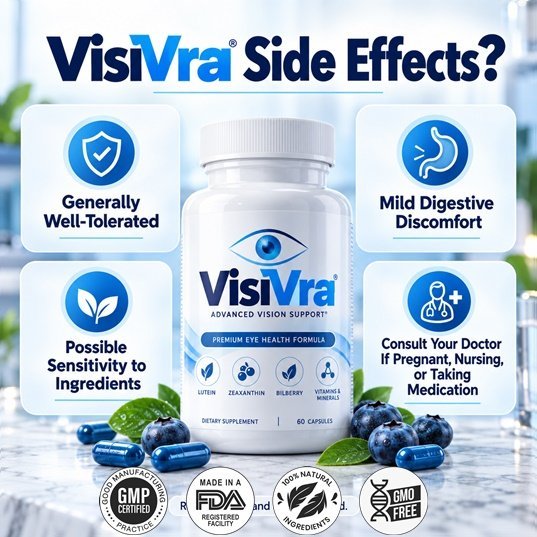
Most people who consider an eye supplement are thinking about benefits. As a biochemist, I always start with safety. The good news is that VisiVra’s vitamins and minerals are dosed at or below 100% of the Daily Value, so one capsule a day will not push a healthy adult over any upper limit. The more important questions come from the proprietary blend, which contains several botanicals known to interact with common medicines.
The label warning: Not for use by those under the age of 18 or pregnant or nursing mothers. Consult with a physician prior to use, especially if you are taking a medication or have a medical condition. Do not exceed the recommended dose.
The vitamins and minerals: low risk
| Nutrient | Per capsule | Adult upper limit | Comment |
|---|---|---|---|
| Zinc | 11 mg | 40 mg/day | Well within limits; copper (0.9 mg) included to balance it |
| Vitamin A (beta-carotene) | 450 mcg RAE | 3,000 mcg RAE applies to preformed vitamin A only | Beta-carotene is not linked to vitamin A toxicity or birth defects |
| Vitamin C | 90 mg | 2,000 mg/day | Low risk |
| Vitamin E | 15 mg | 1,000 mg/day | Low risk; large doses (above about 400 IU) may add to bleeding risk |
| Selenium | 20 mcg | 400 mcg/day | Low risk |
| Chromium | 15 mcg | None established | May affect blood sugar and levothyroxine absorption (see below) |
A note for smokers: in large trials, high-dose beta-carotene (20 mg a day in the ATBC trial) increased lung cancer risk in smokers. VisiVra’s 450 mcg RAE corresponds to roughly 0.9 mg of supplemental beta-carotene, a small fraction of that amount. Smokers and former smokers may still wish to discuss any beta-carotene supplement with their doctor.
Possible side effects of the blend ingredients
| Ingredient | Possible side effects | Source |
|---|---|---|
| Ginkgo leaf | Generally well tolerated; dizziness, stomach upset and headache are the most common | NCCIH |
| Coleus forskohlii (forskolin) | Low blood pressure, slow heart rate, diarrhoea | Memorial Sloan Kettering |
| Alpha lipoic acid | Nausea, vomiting, low blood sugar | Memorial Sloan Kettering |
| Bilberry | Generally well tolerated; bleeding risk with blood thinners | NCCIH, Memorial Sloan Kettering |
| Grape seed extract | Generally well tolerated | NCCIH |
| Lutein, zeaxanthin, astaxanthin, lycopene | Rarely any; very high carotenoid intake can tint the skin | Memorial Sloan Kettering, EFSA |
Because the individual amounts in the 351 mg blend are not disclosed, these effects are less likely than at the full doses used in studies, but they cannot be ruled out.
Drug interactions to know about
Blood thinners, antiplatelets, aspirin and NSAIDs
This is the most important interaction group for VisiVra, because three blend ingredients point the same way. NCCIH warns that ginkgo may increase the risk of bleeding in people taking anticoagulants such as warfarin. Memorial Sloan Kettering warns that bilberry may increase bleeding risk with anticoagulants, antiplatelet drugs, aspirin and NSAIDs, and that forskolin may increase the risk of bleeding or bruising with blood thinners. If you take any of these medicines, or have a bleeding disorder, do not start VisiVra without your doctor’s approval.
Insulin and diabetes medicines
Alpha lipoic acid may add to the glucose-lowering effect of diabetes drugs, according to Memorial Sloan Kettering. The NIH Office of Dietary Supplements notes that chromium may increase insulin sensitivity, so combining it with insulin, metformin or other diabetes medicines could increase the risk of low blood sugar.
Blood pressure medicines
Forskolin may lower blood pressure, so its effects could add to beta-blockers, ACE inhibitors, calcium channel blockers or vasodilators.
Levothyroxine
In a small study, chromium picolinate taken at the same time as levothyroxine reduced levothyroxine absorption. Take them several hours apart and ask your pharmacist.
Antibiotics
Zinc can reduce absorption of quinolone and tetracycline antibiotics. The NIH advises taking the antibiotic at least 2 hours before or 4 to 6 hours after zinc.
Chemotherapy and radiation
Memorial Sloan Kettering notes that antioxidants such as alpha lipoic acid may counteract chemotherapy and radiation. People in cancer treatment should check with their oncology team first.
Who should avoid VisiVra or ask a doctor first
- Pregnant or breastfeeding women and anyone under 18: the label says VisiVra is not for these groups, and NCCIH says ginkgo may be unsafe during pregnancy.
- People on blood thinners or with bleeding disorders, and anyone scheduled for surgery or dental surgery.
- People with diabetes on glucose-lowering medicines.
- People on blood pressure medicines or with low blood pressure or a slow heart rate.
- People taking levothyroxine.
- People in cancer treatment.
- People with polycystic kidney disease, who Memorial Sloan Kettering advises should avoid forskolin products.
- People with diagnosed eye disease: follow your eye doctor’s treatment plan.
Stacking with other supplements
Because VisiVra’s micronutrient doses are modest, stacking is less of a concern than with high-dose formulas. Still, check before combining it with:
- AREDS2 formulas, which already provide zinc, copper, vitamins C and E, lutein and zeaxanthin.
- Other ginkgo, fish oil, garlic, turmeric or vitamin E supplements, which may add to bleeding risk.
- Other blood-sugar supplements such as berberine or cinnamon extracts, alongside alpha lipoic acid and chromium.
Quality and purity
The label lists other ingredients as hypromellose (vegetable capsule), rice flour, magnesium stearate and silicon dioxide, and names VisiVra of Aurora, Colorado as the distributor. It does not state where the product is made, whether the facility follows good manufacturing practices, or whether batches are tested by a third party. If quality assurance matters to you, ask support (support@tryvisivra.com) for a certificate of analysis.
Warning signs to stop and get help
- Unusual bruising, nosebleeds, bleeding gums or blood in urine or stool.
- Dizziness, fainting or a very slow pulse.
- Shakiness, sweating, confusion or other signs of low blood sugar.
- Severe or persistent nausea, vomiting or diarrhoea.
- Rash, swelling, itching or difficulty breathing (possible allergic reaction: seek emergency care).
Separately, seek urgent eye care for sudden vision loss, a shadow or curtain over your vision, flashes of light, a sudden shower of floaters or eye pain.
Bottom line on safety
For a healthy adult who takes no interacting medicines, VisiVra’s vitamins and minerals are low risk and its botanicals are generally well tolerated. The interactions are real, though: anyone on blood thinners, diabetes medicines, blood pressure medicines or levothyroxine, and anyone pregnant, breastfeeding or under 18, should speak with a doctor before taking it. Bring the bottle so they can see the full label.
Frequently asked questions
What are the most common VisiVra side effects?
Side effects are uncommon. The blend ingredients can occasionally cause stomach upset, headache, dizziness or nausea. Taking the capsule with food usually helps.
Can VisiVra interact with warfarin?
Yes, potentially. Ginkgo, bilberry and forskolin may each increase bleeding risk with warfarin and other blood thinners. Do not combine them without your doctor’s approval.
Can I take VisiVra while pregnant?
No. The label says VisiVra is not for pregnant or nursing mothers.
Is the zinc in VisiVra safe?
Yes for most adults. One capsule provides 11 mg, well below the 40 mg adult upper limit, and includes 0.9 mg copper to balance it.
Sources
- VisiVra Supplement Facts label (product bottle, lot EVIB_211_03_050626)
- NCCIH – Ginkgo: Usefulness and Safety
- Memorial Sloan Kettering – Forskolin (Coleus forskohlii)
- Memorial Sloan Kettering – Alpha-Lipoic Acid
- NIH Office of Dietary Supplements – Chromium Fact Sheet
- NIH Office of Dietary Supplements – Zinc Fact Sheet
- NIH Office of Dietary Supplements – Vitamin A and Carotenoids Fact Sheet
- NIH Office of Dietary Supplements – Vitamin C Fact Sheet
- NIH Office of Dietary Supplements – Vitamin E Fact Sheet
- NIH Office of Dietary Supplements – Selenium Fact Sheet
- NCCIH – Bilberry: Usefulness and Safety
- Memorial Sloan Kettering – Bilberry Fruit
- NCCIH – Grape Seed Extract: Usefulness and Safety
- Memorial Sloan Kettering – Lutein
- EFSA – Safety of astaxanthin for its use as a novel food in food supplements
- U.S. FDA – Dietary Supplements
*These statements have not been evaluated by the Food and Drug Administration. This product is not intended to diagnose, treat, cure, or prevent any disease. Read our medical disclaimer.